When the clocks “fall back” each November, most people look forward to that daylight savings extra hour of sleep. But if you’ve felt groggy, sluggish, or even more tired since the change, you’re not alone.
Even though we technically gain an hour, your body can feel off for days, raising the question of how daylight saving time really affects sleep.
And honestly, who has time to prepare for that shift? Between work, family, and the fall rush, most of us barely remember the change until it’s here.
But that’s okay! Now’s the perfect time to get your sleep back on track. With a few simple tweaks and a refreshed sleep setup, you can bounce back fast and make that extra hour of sleep truly restorative.
Why the end of daylight saving time disrupts sleep
When daylight saving time ends, mornings feel brighter and evenings darker and your body needs time to catch up. Even though you technically gain time, you may not feel rested right away.
So, do we get more sleep when daylight saving time ends?
Physically, yes. The darker evenings and earlier sunsets signal your brain to start producing melatonin sooner, the hormone that helps you fall asleep. In theory, this shift should make it easier to go to bed earlier and get more total rest.
But your body’s circadian rhythm thrives on regularity, not sudden change (this is why many argue for ending the time switch altogether). When the pattern of daylight changes overnight, your brain’s internal clock loses its usual cues for when to feel tired or alert, making it harder to settle into a normal sleep rhythm.
The result is that familiar “off” feeling, similar to jet lag: tired earlier in the day, wide awake at night, and not as refreshed as you’d expect, even after gaining an hour.
Why the time change can feel like jet lag
-
Earlier sunsets trigger melatonin sooner: You feel sleepy earlier in the evening. -
Morning light exposure changes: It becomes harder to wake up and feel alert. -
Body clock lags behind the new time: You may experience grogginess and restless nights.
Establish a healthier sleep routine
Since your body’s adjusting anyway, use this period to refresh your routine. These easy strategies help you get back on rhythm:
- Morning sunlight: Step outside within an hour of waking to reset your body clock.
- Consistent sleep hours: Keep bedtimes and wake-ups steady, even on weekends.
- Cut the late stimulants: Skip caffeine, alcohol, and blue-light screens before bed.
- Wind-down routine: Try soft lighting, stretches, or reading before sleep.
- Sleep-space refresh: Wash bedding, clear clutter, and ensure your mattress supports you properly.
If your mattress is past its prime, this adjustment becomes even tougher because a worn, uneven surface makes it harder to reach the deep, restorative stages of sleep your body needs to reset.
Is your mattress making it harder to bounce back?
When your sleep feels off, your mattress could be part of the problem. An unsupportive bed magnifies every small disruption, including the shift from daylight saving time.
Look for these signs:
- You wake up stiff, sore, or still tired
- The mattress dips, sags, or feels uneven
- Allergy flare-ups or musty odors linger. If you need help freshening things up, learn how to properly clean your mattress.
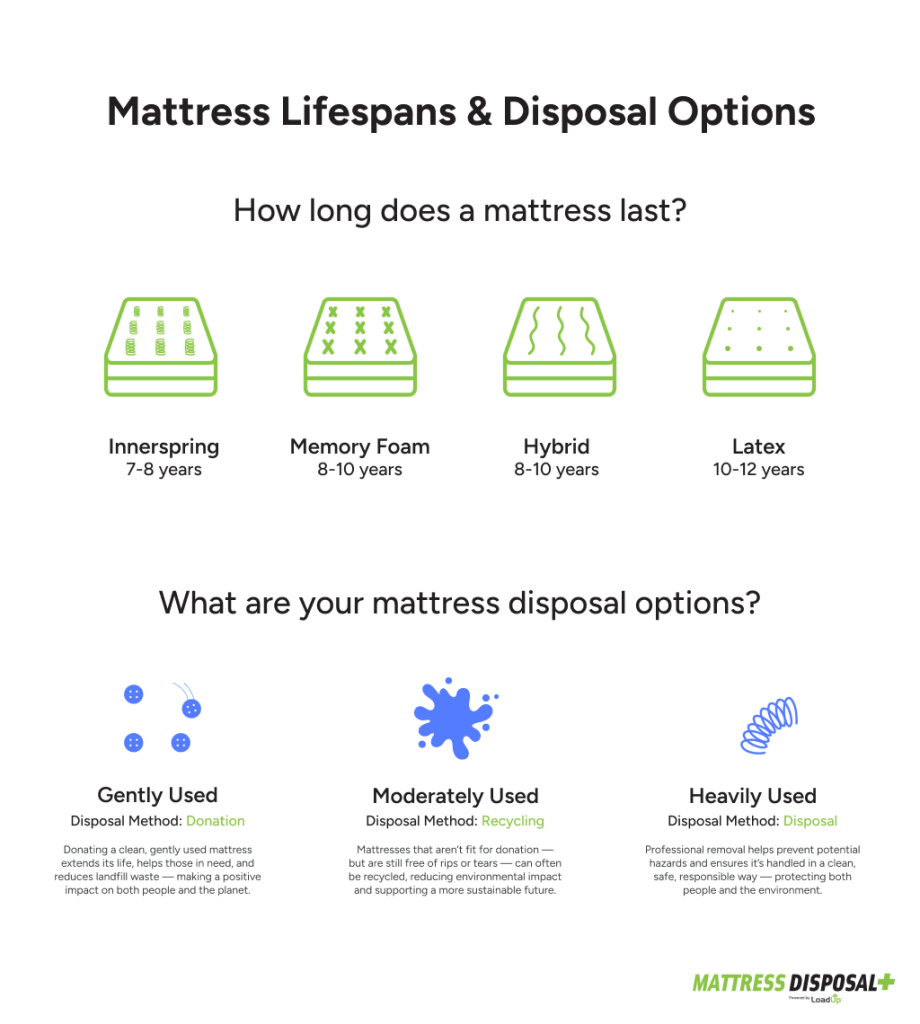
- It’s 7–10 years old (or older) and losing support
Even if your mattress isn’t ancient, seasonal shifts are the perfect reminder to inspect for wear, rotate if applicable, and deep-clean your bedding. A refreshed surface supports smoother transitions through sleep-pattern changes year-round.
Not sure if it’s time? Use this quick lifespan guide to decide whether your mattress is ready for donation, recycling, or professional disposal.
Why fall is the perfect time to replace your mattress
With cooler nights and longer evenings, you’ll spend more time in bed, so fall is the best time to assess your mattress’s condition. Think of this as a sleep reset moment:
- The “fall back” hour reminds you your body needs true rest, not just extra time.
- It’s smart to upgrade comfort before holiday guests and busy schedules arrive.
- A new mattress now means better, consistent sleep through winter.
If your bed is sagging or flat, this is your sign to let go and upgrade responsibly.
How to responsibly dispose of an old mattress
Getting rid of a mattress shouldn’t be confusing, time-consuming, or unfairly priced. That’s why Mattress Disposal Plus keeps the process Simple. Fast. Fair.
-
Simple: Clarity at every step. From the moment you request a quote to the moment your mattress is gone, you’ll know exactly what to expect. No hidden fees, fine print, or surprises. -
Fast: Your time matters. Get an instant price, schedule a pickup online in minutes, and local pros will handle the heavy lifting right from your home. No dragging it to the curb, no waiting around all day. -
Fair: Doing what’s right. Our pricing is upfront, service is reliable, and your mattress is handled responsibly. Whenever possible, materials like foam, steel, and fabric are recycled or repurposed instead of dumped in a landfill.
Small steps, big sleep gains
Recovering after daylight saving time isn’t just about clocks, it’s about creating conditions where your body can truly rest. Whether you’re catching up on lost sleep or trying to make the most of that daylight savings extra hour of sleep, small, intentional actions can make all the difference.
A refreshed routine, cleaner space, and supportive mattress help your body adapt faster and sleep deeper all season long. When it’s time to clear out the old and make room for better rest, Mattress Disposal Plus is ready to make the process simple, sustainable, and stress-free.
Get your old mattress removed safely. GET PRICE ❯
Daylight Saving Time & Sleep FAQs
How long does it take to adjust to the time change?
Most people adjust within five to seven days. Your body’s circadian rhythm needs time to sync with new light patterns, but consistent wake-up times and morning sunlight can speed up recovery.
Do we gain or lose an hour of sleep in November?
In November, when daylight saving time ends, we gain one hour of sleep as clocks “fall back.” However, that extra hour can still leave you feeling off for a few days while your body adjusts to earlier sunsets and darker evenings.
What can I do if I can’t fall asleep after the time change?
Try relaxing pre-bed habits like reading or light stretching, dim your lights an hour before bed, and avoid screens or caffeine late in the evening. For more help, check out our guide on how to fall asleep fast.

